
News
5 Nov 2026
prpl Summit 2026: two sold-out days in Vienna

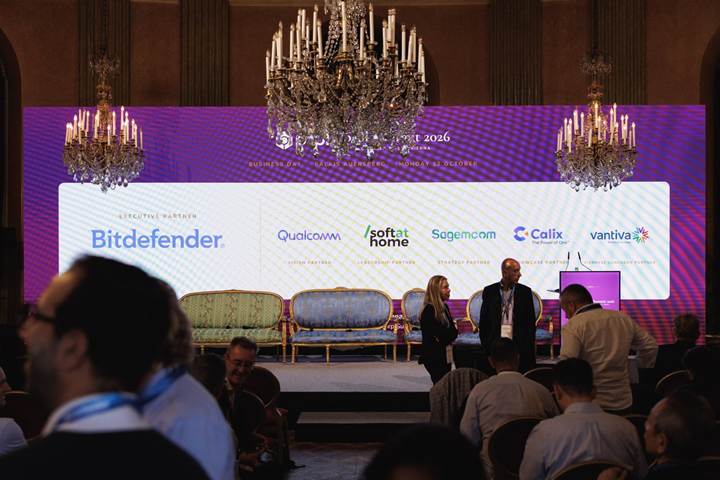
On 12 and 13 October, the prpl community came together in Vienna, alongside Network X, for the prpl Summit 2026. Both days sold out. The Business Day filled all 420 places at Palais Auersperg, and the members-only Technical Day brought 142 people to Prisma by Lumia, with more joining remotely.
The theme was Innovate. Scale. Deploy., and deployment was the story of the year. Operators took the stage to talk about prplWare in production, the demo floor showed what members are shipping, and the prpl Awards recognized the companies and people who moved prplWare forward. Thank you to everyone who joined us, spoke, demoed and sponsored.
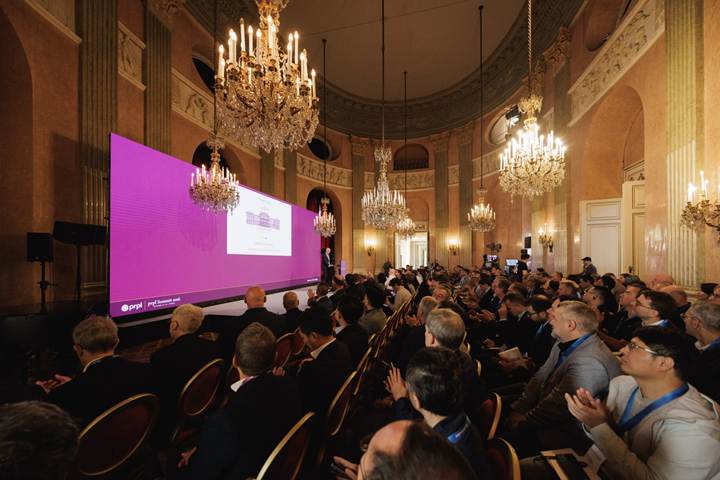
Len Dauphinee, President of the prpl Foundation, opened the day, and Bitdefender’s Razvan Todor gave the first Partner Spotlight. Then the operators who fund prpl set the tone: Sandrine Brébant (Orange), Chris Schmidt (Verizon) and Jason Savard (AT&T) shared where prpl fits in their home networks.
Six roundtables covered the whole value chain:
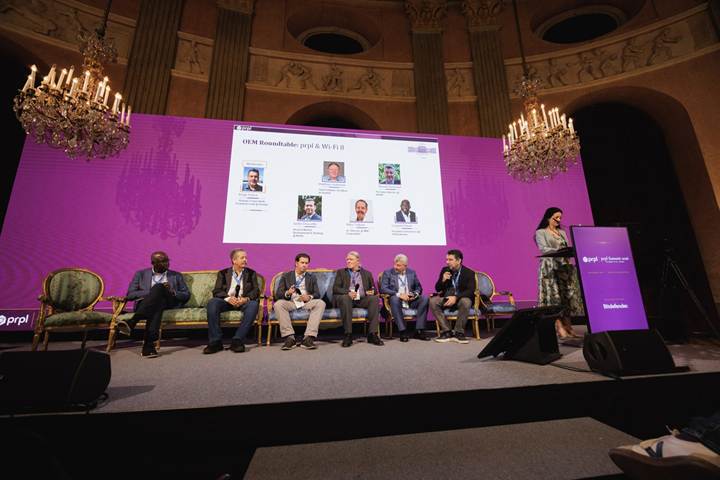
Partner Spotlights from Qualcomm, Vantiva, SoftAtHome, Sagemcom and Calix showed how members are building on prpl. Vodafone and Telenor shared their deployment journeys. Tim Winters (QA Cafe) and Justin Doucette (Nokia) presented the prpl App Store and certification. João Freitas and Wouter Cloetens covered where prplWare stands today and where its long-term roadmap is heading.
On Tuesday, members moved to Prisma by Lumia for a full day of technical sessions, in the room and remotely, moderated by João Freitas. The Working Groups opened the day with updates on what was achieved over the past year and what’s still to come across prplOS, prplLCM, HL-API, Certification, LL-API, Security and prplMesh. The updates were presented by prpl staff in collaboration with Bitdefender, Gemtek, Orange, QA Cafe, SoftAtHome and Vodafone.
Technical deep dives followed on some of the industry’s most prominent topics: memory, Wi-Fi 8, AI on the gateway and telemetry. There was also a deep dive on the recently announced App Certification program, with practical examples of what to do and what to avoid when building apps for prplWare.
Partner Spotlights enriched the day:
Orange also presented its open-source MCP for prpl development.
The day ended with a roundtable on prplWare adoption experiences, where Nokia, KAON, Sagemcom, SoftAtHome, WNC and Gemtek shared their experiences deploying prplWare, how prpl has supported their journeys and the way forward.
80% of Technical Day respondents said the content was highly or very relevant to their work.
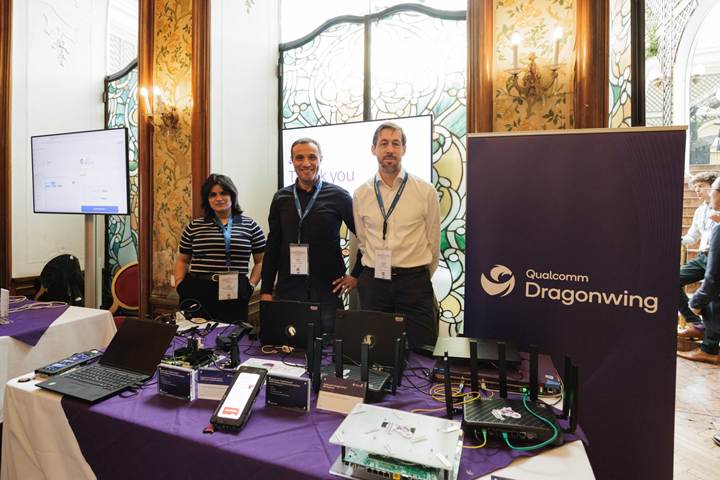
The demo floor was the heart of the Business Day. Thirty-four exhibitors filled 35 tables across the Palais, and the Demo Passport sent guests from table to table collecting stamps for the evening prize draw. In the survey, 84% of those who rated the demo tables found them very or extremely useful.
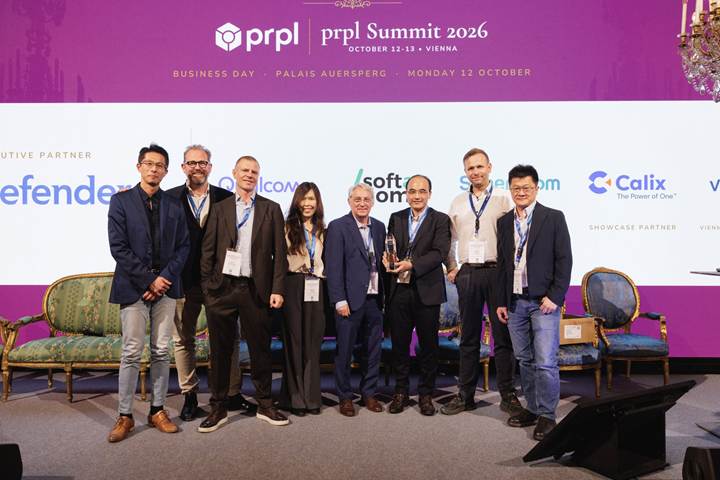
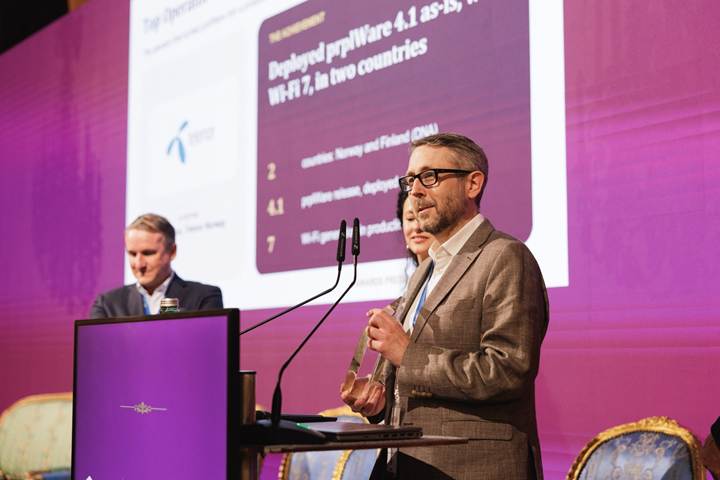
At the close of the day, SoftAtHome presented the prpl Awards:
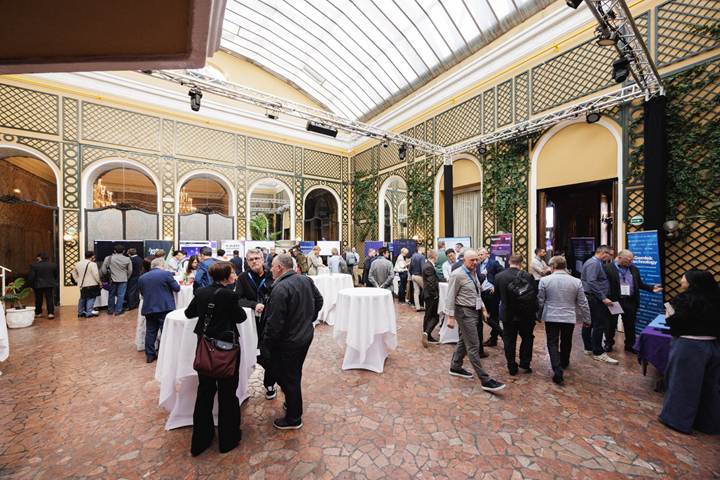
The evening ended with a cocktail reception and Viennese music in the Wintergarten, and the Demo Passport prize draw.
Thank you to the 56 attendees, from 39 companies, who answered our post-event survey.
“Excellent preparation, smooth coordination, and positive energy played a huge role in making the event successful and enjoyable.” — Sagemcom Broadband
“Keep the schedule aligned with Network X. Keep the panels and keynotes.” — Zyxel Communications
“The energy, the good vibes, and the great work that you’re doing.” — Bitdefender
“Both venues were great – locations close to NetworkX is a big plus.” — Actiontec
You also told us what to improve: more room for the demo floor, a better experience in the relay rooms, and a Technical Day with fewer sessions and more time for questions. We’re taking all of it into planning for 2027.
You asked 92 questions on Slido, and we ran out of time for many of them. Here are answers to the most common ones we couldn’t get to on stage.
Memory cost and footprint
With memory prices rising and prplOS needing more memory over time, what is prpl doing to reduce its footprint and keep devices affordable?
The prpl Foundation has announced new prplWare gateway profiles targeting 2GB, 1GB, and 512MB of RAM, in response to operators’ need for smaller memory footprints. For Wi-Fi extenders, we’ve also announced 512MB and 256MB profiles. It’s also worth noting that prplWare is a broad collection of services that can be included or excluded based on each operator’s needs. It was designed from the start to be tailored to different deployments, so devices only carry what they actually use.
How does the prplOS memory footprint compare with OpenWrt and proprietary stacks, and is there a timeline for optimization, including LCM and apps?
prplWare extends OpenWrt rather than replacing it, adding open-source, carrier-grade features that can be included or excluded as needed. With a comparable configuration (the same feature set and the same SDK-reserved memory for hardware offload), it shouldn’t use more resources than alternative solutions. Even so, given the current pressure on RAM prices, we started reducing its footprint in early 2026 and will continue in 2027. LCM and apps will also benefit, as prpl provides tools to reuse, compress, or, if required, offload resources to the cloud.
Why is memory compression (ZRAM) enabled only on the lite profile?
ZRAM can be included and enabled in all profiles. However, it works dynamically and only compresses memory when the system is under pressure and starts running out of resources. prplWare fits comfortably in the 2GB and 1GB profiles, so ZRAM is unlikely to be triggered in those configurations unless a high number of connected devices and apps are deployed. More memory-constrained configurations, such as 512MB, leave less room for caching and apps, so we expect ZRAM to be triggered more often. That’s why we consider it mandatory for the lite profile rather than an optional feature.
Roadmap
When will the roadmap show target dates and versions, and where does AI sit on it?
prpl delivers releases quarterly, and these are already identified up to 2028 as part of our long-term roadmap. We also provide a detailed six-month roadmap listing upcoming features and bug fixes. All of this is available to members in Confluence, and status updates are given weekly in the Working Group meetings. AI hardware support is expected to arrive with the Wi-Fi 8 generation of devices, and prpl expects to put together a standardized framework as early as 2027.
What is the plan for RBUS support?
rbus support is already available in our cross-platform projects, prplMesh and prplLCM. Both have been deployed on RDK-B devices and integrate directly with rbus through the Ambiorix bus abstraction framework, which lets them run on ubus, rbus, or USP.
AI on the gateway
What are the strongest use cases for AI on the gateway, and how could several apps share one AI model?
The strongest use cases are those where data shouldn’t leave the home or where decisions need to be made in real time: Wi-Fi optimization, security and anomaly detection, and Wi-Fi sensing (for example, presence detection). Processing locally at the customer premises protects privacy, keeps latency low, and improves reliability. It also reduces cost and avoids complex cloud infrastructure. To let several apps share one AI model, prpl is working on an AI framework that lets applications reuse resources, including AI models, so memory isn’t wasted on duplicates.
App store and service revenue
When could operators realistically offer an app store on prpl-based gateways?
This is already possible. prplWare ships with LCM, which has been deployed by multiple operators across several regions. It lets services and applications be deployed dynamically at runtime, such as managed Wi-Fi, security, VPNs, speed tests, network diagnostics, and device and service fingerprinting. LCM can be managed using the standard Broadband Forum (BBF) remote management protocols, CWMP (TR-069) and USP (TR-369), and many commercial management platforms can install, remove, and manage applications. prpl is also working on an open-source sample app store to demonstrate these capabilities. However, most operators keep control of the user experience and, as a starting point, have chosen to offer only a targeted set of branded services.
Does new service revenue offset the higher hardware cost that more services and more memory bring?
That depends on the revenue model and value proposition. More services and capabilities create more opportunities to differentiate, which is important to avoid price wars: customers who can’t tell competing providers apart tend to choose the cheapest offer, which hurts revenue. In addition, LCM allows services to be installed dynamically, so unused services don’t need to ship by default, which means this model can actually help reduce costs. For example, parental controls can be installed for families with children and left out where they aren’t needed. The same logic applies to any other software module.
Can prplOS and prplWare be deployed without a systems integrator?
Yes, several prplWare deployments didn’t rely on a systems integrator. Telenor, for example, described its journey at the 2026 prpl Summit Business Day. prplWare provides a common baseline that can be extended with value-added services through container apps, which encourages a clearer split of responsibilities. As a result, operators can work directly with their OEMs in a traditional model. Systems integrators remain a good option for operators working across multiple regions or trying to harmonize customizations across several products.
Security
How do security vendors such as Bitdefender integrate with prpl, and work with OEMs on plugin integration?
Bitdefender, like other security vendors, integrates with prplWare as a value-added container app through the High-Level API (HL-API). prplWare’s architecture defines multiple abstraction layers for different needs, with well-defined integration hooks and a clear split of roles and responsibilities. While security vendors and other app providers interface with the HL-API, OEMs focus on middleware customization and Low-Level API (LL-API) integration with the SoC vendors. prpl also works directly with ecosystem partners and offers several certification programs to ensure integrations happen at the right level, without overlaps or gaps.
How can legacy devices be protected against post-quantum attacks?
For legacy devices, the practical approach is to update what can be updated, starting with hybrid post-quantum key exchange for management traffic to counter “harvest now, decrypt later” attacks. Devices that can’t be upgraded should be shielded behind post-quantum-capable gateways or tunnels until they’re replaced. Longer term, the key is crypto-agility: being able to switch algorithms, including for firmware and app signing, and to rotate or revoke keys remotely. prplWare already provides some of these capabilities, and we’re extending them to container apps.
Could certification ever be bypassed to ship an urgent zero-day patch?
prpl certification is strongly recommended, but it is voluntary. It helps ensure that devices run authentic prplWare components, comply with the standard APIs, and include the dependencies required for value-added services, device management, and SoC diversity, so that customizations remain portable and don’t conflict with one another.
Contributing
What is the process for upstreaming patches, bug fixes, and small improvements?
Patches, bug fixes, and small improvements are tracked as tickets in the prpl Jira system and submitted as merge requests on GitLab. The team reviews each proposal to make sure it follows the contribution guidelines, and accepted changes are then planned for integration in an upcoming release.
The prpl Summit happens because our sponsors make it possible. Thank you to all 32.
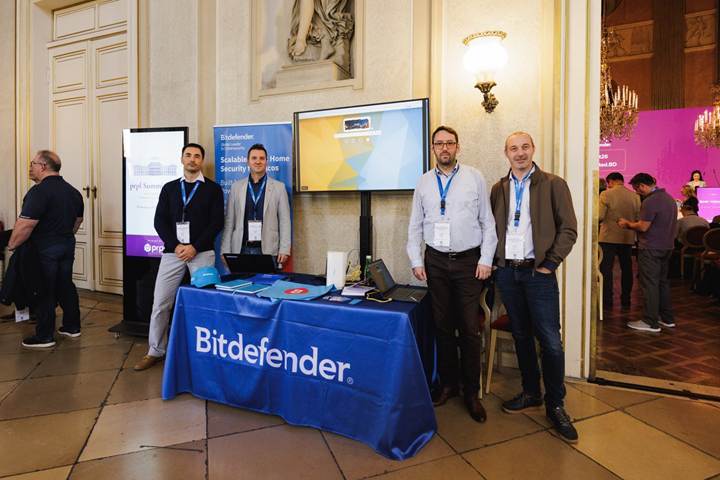
Executive Partner: Bitdefender. Bitdefender was with our guests from the moment they arrived: at the registration desk, on every lanyard and badge, on the “Secure Wi-Fi powered by Bitdefender” network, and in the Executive Networking Lounge with its charging station. Razvan Todor opened the Partner Spotlights on the Business Day main stage, Alexandru Trifan moderated the Security Roundtable, and Ionut Leonte gave Bitdefender’s second Partner Spotlight on the Technical Day. Thank you, Bitdefender, for helping make this year’s Summit what it was.
Lead Partners
Technology Partners: Actiontec, Airties, Beegol, Nokia, WNC
Ecosystem Partners: Consult.Red, CUJO AI, F-Secure, GlobalLogic, HUMAX Networks, Huawei, Inango, Incognito, MaxLinear, Motive, NAGRAVISION, Orange, Plume, Sercomm, Streambow, TCL, Tozed, Zilogic, Zyxel

Recordings. Session recordings from both days are available to prpl members.
Photos. Browse the full photo gallery. Photos by Aaron Jiang Photography.
See you in 2027. The prpl Summit returns to Vienna in October 2027, alongside Network X. Watch this space for the dates and venues, and if you’d like to sponsor, speak or exhibit, write to us at [email protected].
You must be logged in to post a comment.